

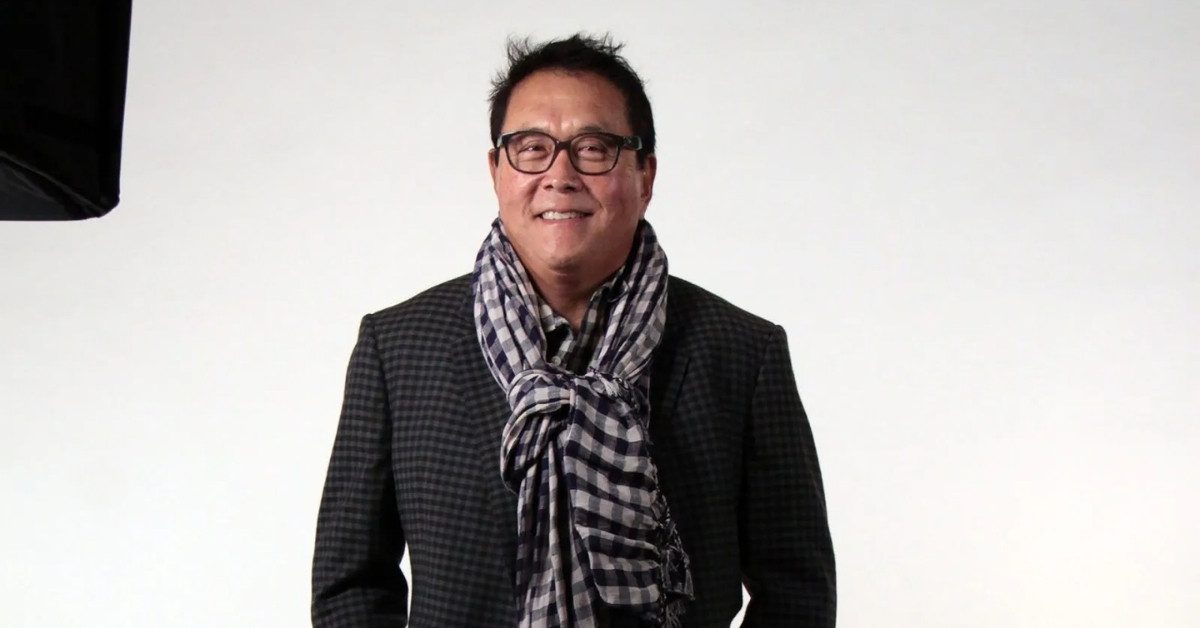
Robert Kiyosaki is widely recognized as one of the most influential voices in modern financial education, known for challenging traditional money advice and promoting asset-based income generation. This article provides an in-depth analysis of robert kiyosaki net worth, examining how his wealth was built, where it comes from, and what sustains it today. We explore his investment philosophy, income streams, career milestones, books, and personal background, while breaking down the real assets and business systems behind his success. Beyond numbers, this guide explains the principles, strategies, and mindset that shaped his financial journey, offering readers a clear understanding of how Kiyosaki built lasting wealth through diversified revenue, passive income, and contrarian thinking.
Quick Facts
| Category | Key Facts & Figures |
| Full Name | Robert Toru Kiyosaki |
| Primary Profession | Author, investor, speaker, financial commentator |
| Known For | Rich Dad Poor Dad and the Rich Dad financial education system |
| Estimated Net Worth | ~$100 million |
| Net Worth Source | Celebrity Net Worth estimates |
| Main Income Model | Asset-based, diversified revenue (not salary-based) |
| Core Revenue Streams | Book royalties, licensing, real estate cash flow, educational products, speaking engagements |
| Bestselling Book | Rich Dad Poor Dad |
| Total Books Written | 25+ books |
| Book Series | Rich Dad book series |
| Major Brand | Rich Dad brand |
| Educational Products | Seminars, coaching, financial education programs |
| Board Game | Cashflow board game (financial literacy tool) |
| Primary Asset Class | Real estate holdings |
| Real Estate Focus | Rental homes, vacation rentals |
| Alternative Investments | Gold and silver, Bitcoin, oil wells |
| Asset Preference | Real assets and tangible assets |
| Investment Philosophy | Contrarian view, asset control, leverage-based growth |
| View on Debt | Supports “good debt” tied to income-producing assets |
| View on Traditional Advice | Critical of formal education and salary dependence |
| Focused Financial Concepts | Passive income, cash flow, economic cycles |
| Stance on Markets | Invests during downturns and economic instability |
| Public Role | Global speaker and financial education advocate |
Robert Kiyosaki’s Net Worth
Robert Kiyosaki’s net worth has long been a topic of public discussion, curiosity, and debate. According to widely cited estimates from Celebrity Net Worth, his net worth figure is often placed around $100 million. While exact numbers are difficult to verify due to private holdings and fluctuating asset values, this figure reflects decades of diversified income generation rather than a single source of wealth.
Unlike celebrities who rely mainly on salaries, Robert Kiyosaki built his fortune through a combination of intellectual property, business ownership, and real assets. His wealth includes income from bestselling books, royalties and licensing under the Rich Dad brand, real estate holdings, educational products, and speaking engagements. These income streams align with his long-standing emphasis on assets over earned income.
It is important to understand that Kiyosaki’s net worth is not static. He openly discusses economic cycles, debt usage, and leverage, which means his asset values can fluctuate significantly depending on market conditions. His contrarian view on money—embracing debt strategically and investing during downturns—often leads to short-term volatility but long-term positioning.
Rather than presenting his wealth as a finish line, Kiyosaki frames it as evidence of financial skills applied consistently over time. His financial journey reflects systems thinking, cash flow management, and a deep focus on investment performance instead of paycheck stability.
Start Earning Passive Income
Passive income is the foundation of Robert Kiyosaki’s financial philosophy and one of the most emphasized concepts across his work. He defines passive income as money earned with minimal daily effort once systems are in place. This includes income from rental homes, vacation rentals, royalties, and business ownership.
Kiyosaki consistently contrasts passive income with earned income. Earned income depends on time and labor, while passive income depends on assets. His approach encourages people to build income streams that generate cash flow regardless of whether they are actively working.
Common passive income channels discussed by Kiyosaki include:
- Rental properties producing monthly cash flow
- Royalties and licensing from books and educational products
- Business systems managed by teams rather than individuals
- Investments tied to real assets rather than speculation
He stresses that passive income is not effortless at the beginning. It requires financial education, patience, and risk management. The upfront work—learning markets, managing debt, and structuring deals—is what eventually leads to long-term freedom.
Kiyosaki also emphasizes that passive income protects investors during economic instability. When job markets tighten or inflation rises due to government fiscal policy and monetary policy decisions, asset-based income offers resilience. His teachings consistently frame passive income as a hedge against uncertainty rather than a shortcut to wealth.
What Does Robert Kiyosaki Invest In? Investment Strategies and Holdings
Robert Kiyosaki’s investment portfolio reflects his preference for tangible assets and his skepticism toward paper-based investments. He frequently states that he avoids relying solely on stocks and bonds, instead favoring real assets that produce income or store value.
His major investment categories include:
- Real estate holdings – Rental homes and vacation rentals that generate consistent cash flow.
- Precious metals – Gold and silver, which he views as protection against inflation and currency devaluation.
- Cryptocurrencies – Bitcoin, in particular, which he sees as an alternative monetary system.
- Oil wells – Energy assets that provide tax advantages and long-term income.
Kiyosaki’s investment strategies are heavily influenced by economic cycles. He believes downturns present opportunities to acquire assets at discounted prices, especially when others are fearful. This contrarian view separates his approach from traditional advice focused on stability and diversification within paper markets.
Another defining element of his strategy is debt. Kiyosaki openly supports using debt to acquire income-producing assets, provided the asset pays for the liability. He distinguishes between “good debt” tied to assets and “bad debt” tied to consumption.
His focus remains consistent: control assets, generate cash flow, and position investments to benefit from long-term economic shifts rather than short-term market sentiment.
Salary Info
Unlike corporate executives or traditional professionals, Robert Kiyosaki does not rely on a fixed salary. In fact, he often criticizes the concept of salary dependence, arguing that it creates financial vulnerability and limits wealth-building potential.
Instead of a paycheck, his income comes from diversified revenue sources. These include royalties from his book series, licensing agreements tied to the Rich Dad brand, revenue from educational products, and fees from public speaking and coaching. Each of these income streams operates independently, reducing reliance on any single source.
To clarify the distinction, the table below outlines how salary-based income differs from Kiyosaki’s income model:
| Income Type | Characteristics | Risk Level |
| Salary | Fixed, time-based, taxed heavily | High dependence |
| Royalties | Scalable, asset-based | Moderate |
| Rental Income | Cash-flow driven | Market-dependent |
| Licensing | Brand-driven, recurring | Lower |
This model aligns with his emphasis on income generation through ownership rather than employment. Kiyosaki frequently explains that salaries limit upside potential, while asset-based income scales with performance and systems.
By removing salary dependency, he demonstrates how wealth can grow independently of time, age, or location.
Automated Investing To Grow Your Money
Automation plays a crucial role in Robert Kiyosaki’s approach to investing. While he is known for hands-on education, he strongly supports systems that reduce emotional decision-making and ensure consistency.
Automated investing, in his framework, does not mean passive ignorance. Instead, it means setting up structures that operate efficiently once designed. Examples include property management teams for rental homes, automated royalty collection systems, and business processes managed by trained professionals.
Key benefits of automation include:
- Reduced emotional investing during market swings
- Improved consistency in saving and reinvesting
- Scalability without personal burnout
Kiyosaki often links automation to discipline. By removing daily decision pressure, investors are less likely to sabotage long-term plans. This is especially important during periods of economic instability, when fear-driven decisions can erode wealth.
Automation also supports his broader message: financial freedom is not about working harder but building smarter systems. Once income streams are automated, time becomes available for strategy, learning, and identifying new opportunities.
Key Milestones in Robert Kiyosaki’s Career
Robert Kiyosaki’s career did not begin in finance or publishing. His early professional life included service as a Marine Corps officer and later work as an entrepreneur. These experiences shaped his views on leadership, risk, and resilience.
A major turning point came with the release of Rich Dad Poor Dad, a book that challenged conventional ideas about money, formal education, and job security. Initially self-published, it eventually became a global bestseller, forming the foundation of the Rich Dad brand.
Key milestones include:
- Launch of Rich Dad Poor Dad as a self-published book
- Expansion into a broader book series
- Creation of the Cashflow board game as an educational tool
- Growth into seminars, coaching, and financial education products
Each milestone expanded his reach and diversified his revenue. Rather than relying solely on book sales, Kiyosaki built an ecosystem around financial education, reinforcing his message through multiple formats.
Robert Kiyosaki Quotes on Personal Finance
Robert Kiyosaki is widely quoted for his straightforward and often provocative insights. His quotes reflect core principles rather than tactical advice.
On Prioritizing Investments
He emphasizes acquiring assets first and worrying about lifestyle later. This principle reinforces delayed gratification and strategic thinking.
On Discipline in Investing
Kiyosaki frequently highlights discipline as more important than intelligence. Consistent action, not brilliance, drives results.
On Building Lasting Wealth
His messaging consistently frames wealth as a long-term outcome of habits, systems, and mindset rather than luck or timing.
These quotes resonate because they challenge comfort-driven financial decisions and encourage proactive learning.
How Many Books Has Robert Kiyosaki Written?
Robert Kiyosaki has written over two dozen books, many of which are part of the Rich Dad book series. These books cover topics ranging from investing basics to advanced wealth-building strategies.
His books are designed to be accessible, avoiding complex jargon and focusing on mindset shifts. The success of these books generated substantial royalties and reinforced his authority as a financial commentator.
Beyond individual titles, the books function as entry points into his broader educational ecosystem, including coaching and seminars.
The Cashflow Quadrant
The Cashflow Quadrant is one of Kiyosaki’s most influential frameworks. It categorizes income into four types: Employee, Self-Employed, Business Owner, and Investor.
Kiyosaki advocates transitioning toward the Business Owner and Investor quadrants, where income is generated through systems and assets. This framework simplifies complex financial concepts and helps readers visualize paths to financial independence.
The Cashflow board game was developed to reinforce this learning interactively, making abstract ideas tangible and practical.
Who Is Robert Kiyosaki? Personal Life and History
Robert Kiyosaki is an author, speaker, investor, and educator known for reshaping conversations around money. Born in Hawaii, he grew up influenced by two contrasting financial philosophies, which later inspired the Rich Dad narrative.
His personal life is relatively private, but his professional identity centers on teaching financial skills absent from formal education. He consistently critiques traditional schooling for failing to prepare individuals for real-world financial challenges.
Through decades of coaching, speaking engagements, and publishing, Kiyosaki has positioned himself as a leading voice in financial education. His work continues to influence how people think about assets, debt, and long-term wealth creation.
Final Thoughts
Robert Kiyosaki’s financial journey illustrates how diversified revenue, real assets, and disciplined systems can build substantial wealth. His net worth figure is less important than the principles behind it—principles rooted in education, ownership, and long-term thinking. For readers seeking clarity on income generation and financial independence, his story offers both inspiration and practical direction.
FAQS
What is Robert Kiyosaki’s net worth?
Robert Kiyosaki’s net worth is estimated at around $100 million, primarily built through books, real estate holdings, licensing, and diversified asset-based income streams.
How did Robert Kiyosaki make his money?
He built wealth through bestselling books, the Rich Dad brand, real estate investments, educational products, royalties, and global speaking engagements.
Is Robert Kiyosaki a billionaire?
No, Robert Kiyosaki is not a billionaire. Public estimates commonly place his net worth figure near $100 million, depending on asset valuations.
What does Robert Kiyosaki invest in?
Robert Kiyosaki invests in real assets including real estate, gold and silver, Bitcoin, oil wells, and other tangible assets.
Does Robert Kiyosaki earn a salary?
Robert Kiyosaki does not rely on a salary. His income comes from passive income sources like royalties, rentals, licensing, and educational businesses.
How many books has Robert Kiyosaki written?
Robert Kiyosaki has written more than 25 books, many within the Rich Dad book series focused on financial education and wealth-building strategies.
What is Rich Dad Poor Dad about?
Rich Dad Poor Dad explains the difference between assets and liabilities, promoting financial education, passive income, and asset ownership over traditional employment.
How does Robert Kiyosaki earn passive income?
He earns passive income through rental homes, vacation rentals, book royalties, licensing deals, and business systems managed independently of his time.
What is the Cashflow Quadrant?
The Cashflow Quadrant categorizes income into Employee, Self-Employed, Business Owner, and Investor, encouraging movement toward asset-driven income categories.
Is Robert Kiyosaki a real estate investor?
Yes, real estate is a core part of Robert Kiyosaki’s investment portfolio, focused on cash-flowing rental properties and long-term asset appreciation.
What is Robert Kiyosaki’s investment philosophy?
His philosophy emphasizes assets over income, leveraging good debt, understanding economic cycles, and taking a contrarian view during market downturns.
Why is Robert Kiyosaki controversial?
He challenges traditional advice on jobs, savings, and education, often promoting leverage, debt, and alternative assets, which sparks debate among financial professionals.

Nathan Cole writer at BlessingsShine, dedicated to creating heartfelt blessings, prayers, and inspirational messages that uplift and guide readers. With years of experience, he blends empathy, spiritual insight, and practical wisdom to help people find comfort, positivity, and clarity in everyday life. Nathan’s work is designed to inspire hope, strengthen connections, and provide meaningful words that readers can use in personal reflection or to share with others.