

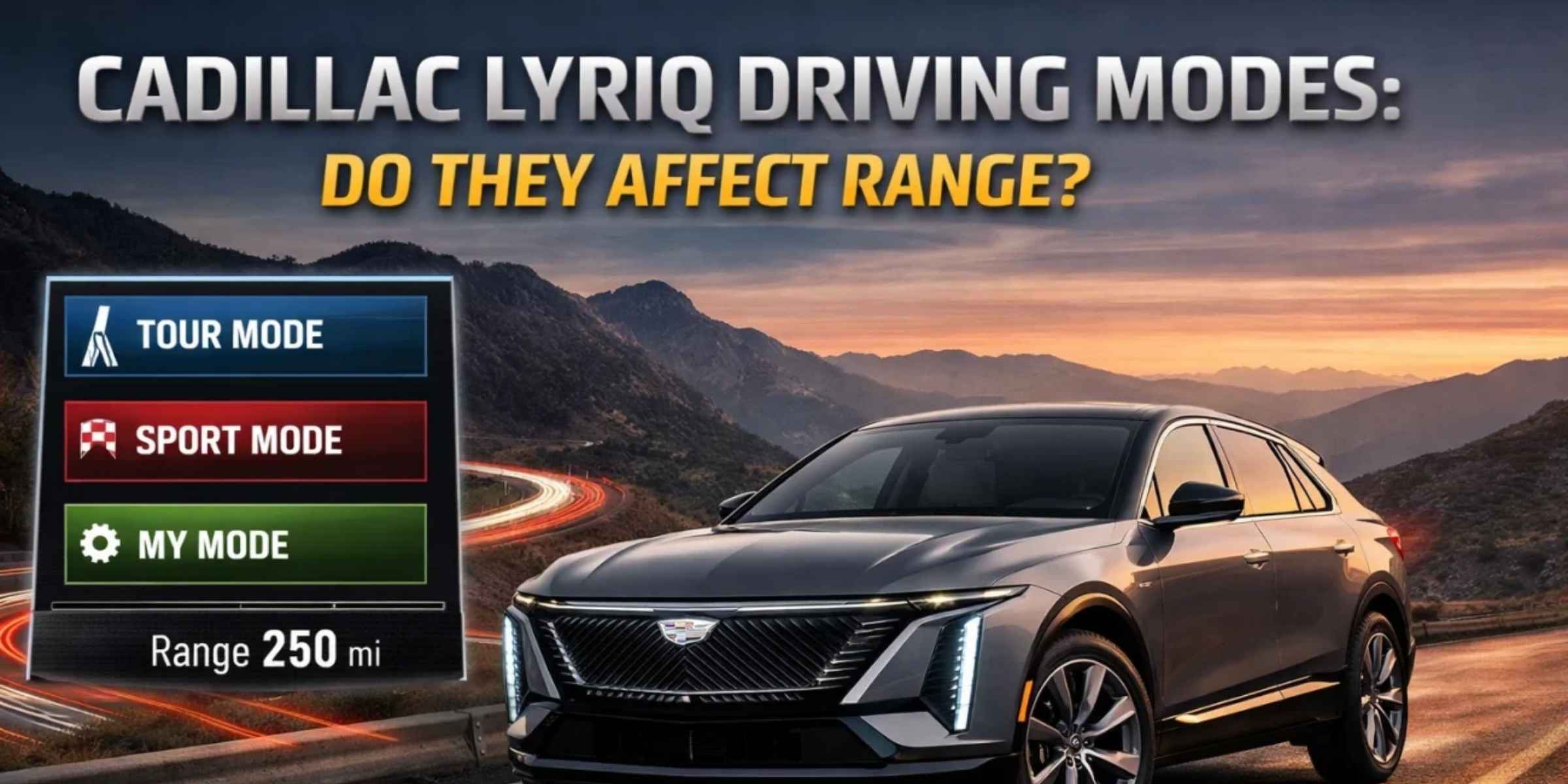
Many electric vehicle owners want to know whether changing drive settings can improve efficiency. One of the most common questions among luxury EV buyers is: do the driving modes in Cadillac Lyriq offer different ranges or battery usages? The answer is yes — but the impact depends on how and where you drive.
The Cadillac Lyriq combines luxury, advanced software, and intelligent energy management to optimize battery performance across different conditions. Its selectable driving modes alter throttle response, steering feel, regenerative braking behavior, and power delivery. These adjustments can directly influence energy consumption and overall driving range.
In this guide, you’ll learn how the Cadillac Lyriq’s driving modes work, which settings consume more battery power, and how to maximize range without sacrificing comfort or performance. We’ll also cover real-world efficiency factors, regenerative braking, and practical driving tips for everyday EV owners.
Do Cadillac Lyriq Driving Modes Affect Range and Battery Usage?
Yes, Cadillac Lyriq driving modes can affect both range and battery usage. While the vehicle uses the same Ultium battery system regardless of mode, software calibration changes how aggressively the electric motors deliver power. That directly influences energy efficiency.
For example, Sport Mode prioritizes acceleration and responsiveness. It sharpens throttle input and allows quicker torque delivery, which can increase battery consumption during spirited driving. Meanwhile, Tour Mode is designed for balanced everyday efficiency and comfort. Snow/Ice Mode adjusts traction control and power distribution to maintain grip on slippery roads, sometimes reducing efficiency due to additional stability management.
However, the actual range difference between modes is often moderate during normal driving. According to public estimates and EV efficiency reports, driving behavior matters more than the selected mode alone. Aggressive acceleration, highway speeds, and climate control use typically have a greater impact on battery drain than simply switching modes.
Drivers who understand how each mode functions can better optimize range depending on road conditions, weather, and travel needs.
Understanding the Cadillac Lyriq’s Electric Powertrain
The Cadillac Lyriq is built on General Motors’ Ultium EV platform, which supports high-capacity battery systems and advanced energy management software. Depending on trim and drivetrain configuration, the Lyriq offers either rear-wheel drive or all-wheel drive performance with strong torque delivery and smooth acceleration.
The Ultium battery pack is engineered for efficiency and thermal stability. It works alongside regenerative braking systems that recover energy during deceleration. Instead of wasting kinetic energy as heat, the vehicle converts part of it back into electricity and stores it in the battery. This technology plays a major role in extending EV driving range.
Another important feature is the Lyriq’s intelligent power distribution. The vehicle constantly monitors driver input, traction conditions, and energy demand. Driving modes modify these parameters through software rather than mechanical changes. That means battery usage differences come from altered power behavior instead of physical engine adjustments found in gasoline vehicles.
Cadillac also integrates advanced climate and battery thermal management systems. Maintaining optimal battery temperature helps preserve both efficiency and long-term battery health. In extreme hot or cold conditions, the system may consume additional power to regulate temperatures, which can slightly reduce driving range.
Cadillac Lyriq Driving Modes and How They Work
The Cadillac Lyriq includes multiple selectable driving modes designed for different road conditions and driving preferences. These modes primarily adjust throttle sensitivity, steering calibration, traction settings, and regenerative braking response.
Tour Mode
Tour Mode is the standard setting for everyday driving. It balances comfort, efficiency, and responsiveness. Power delivery remains smooth and predictable, making it the most efficient choice for most city and suburban driving conditions. Steering effort is moderate, and energy consumption stays relatively controlled.
For drivers focused on maximizing range, Tour Mode is usually the safest option. It avoids the aggressive acceleration patterns found in performance-oriented settings while still providing strong EV torque when needed.
Sport Mode
Sport Mode increases responsiveness throughout the vehicle. Throttle inputs become sharper, steering may feel tighter, and acceleration becomes more immediate. Because electric motors deliver instant torque, Sport Mode can significantly increase energy demand during rapid acceleration.
This mode is ideal for drivers who prioritize performance and engagement. However, repeated hard acceleration can reduce driving range faster compared to Tour Mode. The impact becomes more noticeable during stop-and-go traffic or aggressive highway merging.
Snow/Ice Mode
Snow/Ice Mode is designed for slippery conditions. It softens throttle response and modifies traction control systems to reduce wheel spin. In some situations, the vehicle may distribute torque differently to maintain stability.
Although this mode improves safety in winter conditions, efficiency can vary. Extra traction management and cold-weather battery performance may reduce overall range. Still, smooth driving in Snow/Ice Mode can help avoid excessive energy waste caused by wheel slip.
One-Pedal Driving
The Lyriq also supports One-Pedal Driving, which increases regenerative braking intensity. When the driver lifts off the accelerator, the vehicle slows down while recovering energy.
In urban driving environments, One-Pedal Driving can improve efficiency because it captures more energy during frequent deceleration. Many EV owners report better battery usage results in city traffic when using this feature consistently.
How Driving Modes Affect Range and Battery Usage
Driving modes influence battery usage mainly through acceleration behavior and energy recovery settings. Electric vehicles consume the most power during rapid acceleration and sustained high-speed driving. Modes that encourage aggressive performance naturally use more electricity.
Sport Mode typically results in the highest battery consumption. Faster torque delivery increases instantaneous power draw from the battery pack. While the difference may seem minor during short trips, long-distance driving with aggressive acceleration can noticeably reduce total range.
Tour Mode generally provides the best efficiency balance. Since throttle mapping is smoother, drivers tend to accelerate more gradually. This reduces peak power demand and helps maintain stable energy consumption. For commuters and long-distance travelers, Tour Mode often delivers the most consistent real-world efficiency.
One-Pedal Driving can also impact overall battery usage positively. Regenerative braking helps recapture energy that would otherwise be lost. In heavy urban traffic, this feature may noticeably improve efficiency. However, on highways with minimal braking, the effect becomes less significant.
Environmental conditions also interact with driving modes. Cold temperatures reduce lithium-ion battery efficiency, while high heat increases cooling demands. Using Sport Mode during extreme weather may amplify energy consumption even further.
Importantly, range estimates displayed in the vehicle are dynamic. The Lyriq continuously adjusts projected mileage based on recent driving patterns, terrain, climate settings, and selected drive mode.
Other Factors That Affect Range
While driving modes matter, several external factors have an even larger effect on Cadillac Lyriq range and battery performance.
Speed and Aerodynamics
Highway driving consumes significantly more energy than city driving because aerodynamic drag increases rapidly at higher speeds. Driving at 75 mph instead of 60 mph can noticeably reduce EV range regardless of selected mode.
Climate Control Usage
Heating and air conditioning systems draw power directly from the battery pack. In cold climates, cabin heating can reduce range substantially because EVs do not generate excess engine heat like gasoline vehicles. Likewise, strong air conditioning use in hot states such as Arizona or Texas may impact efficiency.
Tire Pressure and Wheel Size
Underinflated tires create rolling resistance, forcing the electric motors to work harder. Larger wheels and performance tires can also reduce efficiency slightly due to increased weight and friction.
Terrain and Elevation
Driving uphill requires more energy than flat-road travel. Mountain routes can reduce range quickly, especially during sustained climbs. However, regenerative braking may recover some energy during downhill driving.
Payload and Cargo Weight
Additional passengers or heavy cargo increase total vehicle weight. More weight requires greater energy expenditure during acceleration and climbing. Roof racks and cargo boxes can further reduce efficiency by increasing aerodynamic drag.
Battery Temperature
Battery chemistry performs best within specific temperature ranges. Extremely cold weather slows chemical reactions inside the battery, reducing efficiency and charging performance. Cadillac’s thermal management system helps minimize these effects, but some range loss is unavoidable in harsh conditions.
Tips to Maximize Range in Any Driving Mode
Maximizing Cadillac Lyriq range involves combining smart driving habits with proper vehicle management. Even when using Sport Mode occasionally, drivers can maintain strong efficiency by following a few practical strategies.
First, accelerate gradually whenever possible. Electric vehicles deliver instant torque, but smoother throttle input significantly reduces battery drain. Using Tour Mode for daily commuting can help encourage more efficient driving behavior.
Second, take advantage of regenerative braking. One-Pedal Driving is especially useful in city environments where frequent slowing occurs. Capturing energy during deceleration can improve overall efficiency over time.
Maintaining proper tire pressure is another important factor. Low tire pressure increases rolling resistance and energy consumption. Checking tires regularly helps preserve both efficiency and tire lifespan.
Drivers should also precondition the cabin while the vehicle is plugged in. Preheating or cooling the interior before departure reduces battery usage during driving. Many EV owners overlook this feature even though it can noticeably improve winter range.
Reducing highway speeds can have a surprisingly large effect on efficiency. Driving slightly slower often extends range more effectively than switching driving modes alone. Additionally, minimizing unnecessary cargo weight and removing roof accessories can improve aerodynamics.
Finally, keeping software updated is important. Cadillac periodically releases updates that may optimize battery management, charging efficiency, and energy calculations.
Frequently Asked Questions (FAQs)
Does Sport Mode reduce range in the Cadillac Lyriq?
Yes. Sport Mode typically increases battery usage because it delivers quicker acceleration and more aggressive throttle response. Frequent hard acceleration can noticeably reduce driving range.
Which Cadillac Lyriq driving mode is best for efficiency?
Tour Mode is generally the best option for maximizing efficiency and maintaining balanced battery consumption during everyday driving.
Does One-Pedal Driving improve battery range?
In many city-driving situations, yes. One-Pedal Driving increases regenerative braking, allowing the vehicle to recover energy during deceleration.
Does Snow/Ice Mode use more battery power?
Snow/Ice Mode itself is not highly power-intensive, but winter conditions and additional traction management can reduce overall range.
Do Cadillac Lyriq driving modes change battery capacity?
No. Driving modes do not alter the battery’s physical capacity. They only change how power is delivered and managed by the vehicle software.
Conclusion
So, do the driving modes in Cadillac Lyriq offer different ranges or battery usages? In practical terms, yes. While the differences are not extreme during normal driving, each mode changes how the vehicle uses energy. Sport Mode prioritizes performance and quicker acceleration, which can increase battery consumption. Tour Mode delivers the best balance of comfort and efficiency, while Snow/Ice Mode enhances traction in challenging weather.
However, driving habits, weather conditions, speed, and climate control usage often influence range more than the selected mode itself. Drivers who combine efficient habits with smart use of regenerative braking and proper vehicle maintenance can maximize the Lyriq’s real-world range. Understanding these systems helps owners enjoy both luxury EV performance and long-distance efficiency with greater confidence.

Nathan Cole writer at BlessingsShine, dedicated to creating heartfelt blessings, prayers, and inspirational messages that uplift and guide readers. With years of experience, he blends empathy, spiritual insight, and practical wisdom to help people find comfort, positivity, and clarity in everyday life. Nathan’s work is designed to inspire hope, strengthen connections, and provide meaningful words that readers can use in personal reflection or to share with others.